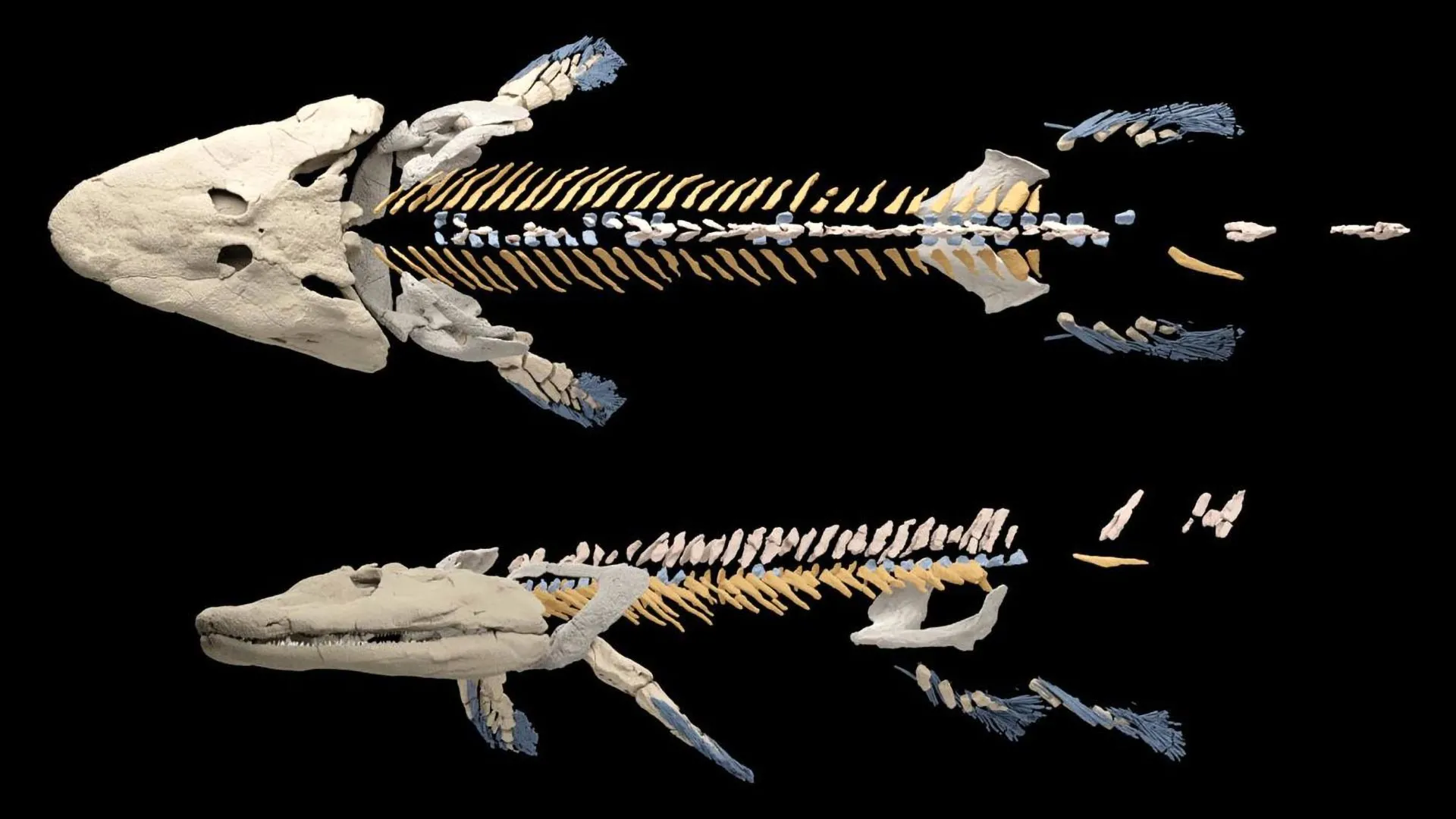
Scientists have discovered that the first animals to venture onto land nearly 380 million years ago had surprisingly stiff necks, overturning a long-standing theory about evolution. Rather than evolving to help animals turn their heads, necks may have emerged as part of the anatomical changes that allowed them to move using their front limbs.
Related Posts

“Crawzilla” was huge. Then scientists found an even bigger crayfish
A nationwide search for giant crayfish uncovered a record-breaking Tennessee specimen and a surprising mystery about how big these freshwater creatures can grow. Scientists found
A nationwide search for giant crayfish uncovered a record-breaking Tennessee specimen and a surprising mystery about how big these freshwater creatures can grow. Scientists found

Human sacrifices were ‘plied with cocaine and alcohol’ before gruesome Inca ritual
Archaeologists on the summit of Lullaillaco Mountain (Picture: J. Reinhard/Cover Images) Women and children may have been plied with cocaine, alcohol and psychoactive drugs before
Archaeologists on the summit of Lullaillaco Mountain (Picture: J. Reinhard/Cover Images) Women and children may have been plied with cocaine, alcohol and psychoactive drugs before

400,000-year-old teeth reveal a stunning twist in human evolution
A groundbreaking discovery is rewriting the story of human evolution, revealing that an ancient human species once thought to be an evolutionary dead end may
A groundbreaking discovery is rewriting the story of human evolution, revealing that an ancient human species once thought to be an evolutionary dead end may