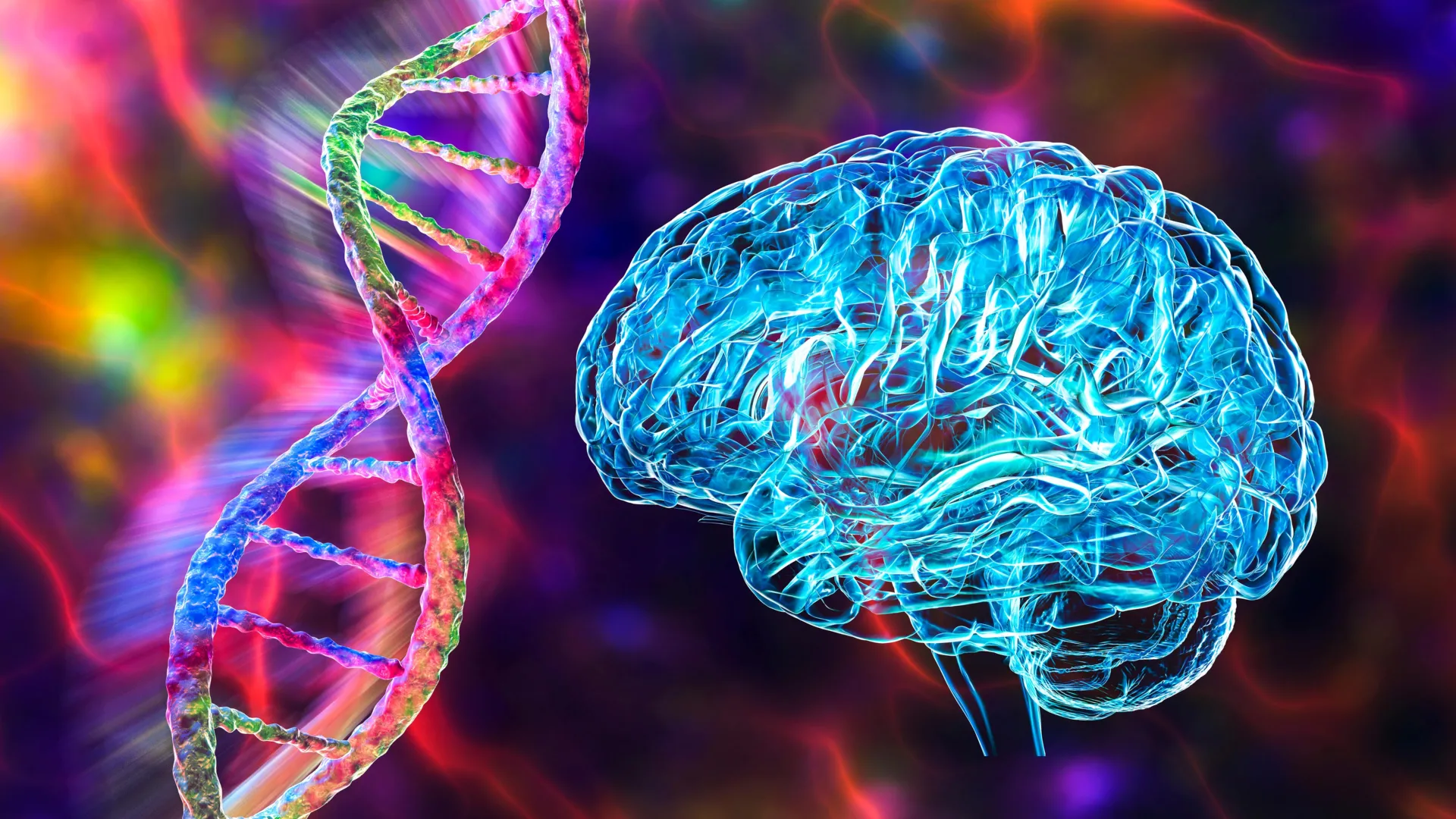
A virus that infected chimpanzees millions of years ago may have helped shape one of the most important differences between humans and our closest relatives: how our brains develop. Scientists at Lund University discovered that ancient viral DNA embedded in the chimpanzee genome switches off a gene called LINC00662, which remains active in humans and appears to play an important role in early brain development.
Related Posts

The mystery of how hair knows where to grow may finally be solved
Scientists have discovered that the intricate patterns of hair follicles on mammals may arise from a remarkably simple process involving cells following chemical signals. The
Scientists have discovered that the intricate patterns of hair follicles on mammals may arise from a remarkably simple process involving cells following chemical signals. The
Scientists discover mysterious “lonely” brain waves linked to memory loss
Scientists have uncovered a surprising link between Alzheimer’s-related protein buildup, disrupted brain waves during deep sleep, and fading memory. The findings suggest that hidden changes
Scientists have uncovered a surprising link between Alzheimer’s-related protein buildup, disrupted brain waves during deep sleep, and fading memory. The findings suggest that hidden changes
Modern neuroscience is rediscovering a surprising idea freud had 130 years ago
Researchers have identified striking parallels between Sigmund Freud’s century-old theories and modern neuroscience, suggesting that the brain’s constant predictions shape how we experience reality. The
Researchers have identified striking parallels between Sigmund Freud’s century-old theories and modern neuroscience, suggesting that the brain’s constant predictions shape how we experience reality. The