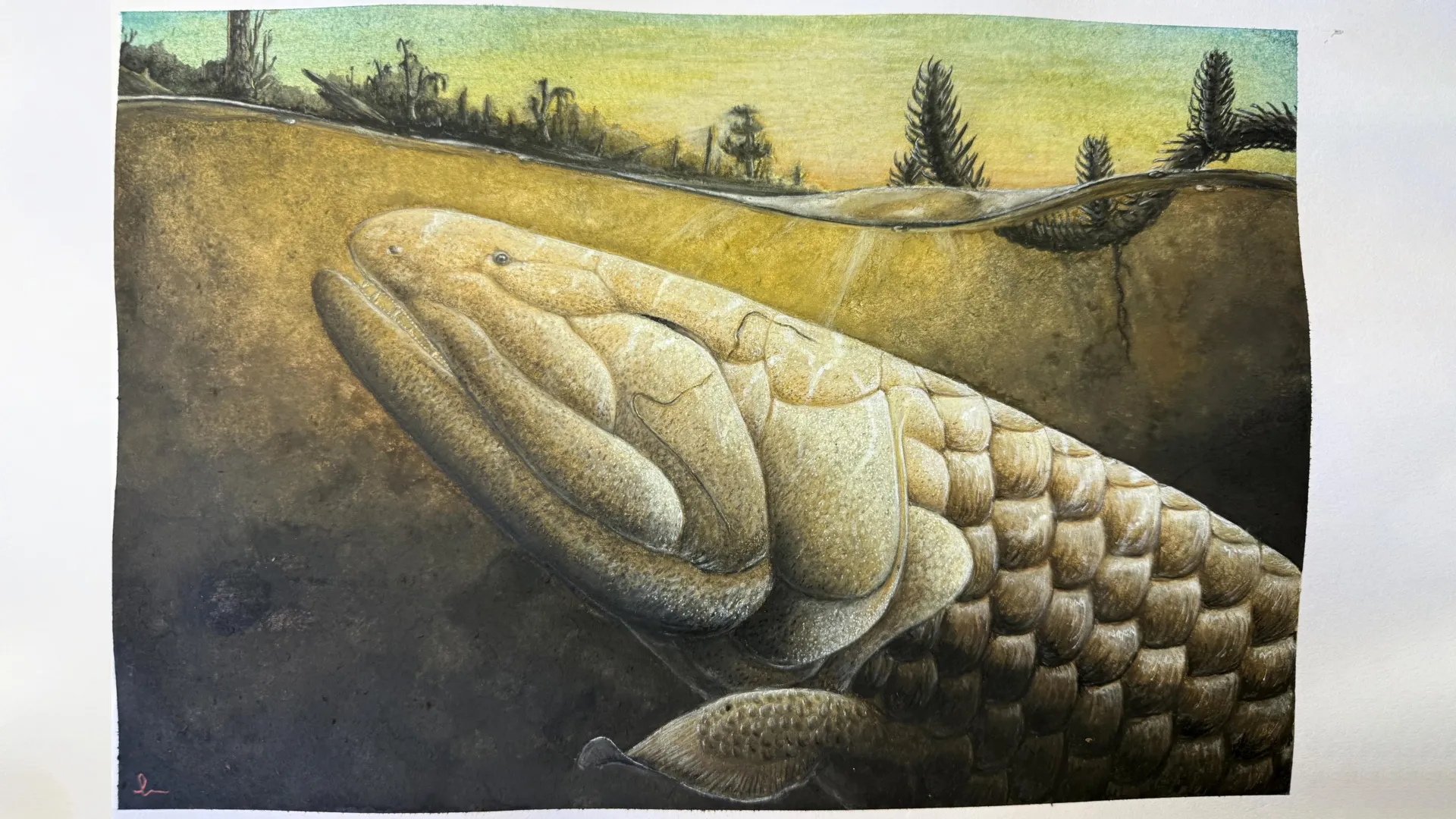
Scientists have peered inside the skull of a 380-million-year-old Antarctic fish that was closely related to the first animals to walk on land, revealing surprising clues about how life began its move out of the water. Using advanced neutron imaging, researchers discovered that Koharalepis jarviki had features suited for living near the water’s surface, including openings in its skull that may have helped it gulp air and a light-sensitive organ linked to day-night rhythms.
Related Posts

Scientists are seriously asking if bees and ChatGPT are conscious
New studies suggest consciousness can’t be judged solely by behavior, whether it’s a chatbot discussing philosophy or a bee searching for nectar. Researchers are increasingly
New studies suggest consciousness can’t be judged solely by behavior, whether it’s a chatbot discussing philosophy or a bee searching for nectar. Researchers are increasingly

Could cosmic memory explain dark matter, dark energy, and black holes?
A new theory suggests the universe is constantly recording its own history in the fabric of spacetime. If correct, this cosmic memory could help solve
A new theory suggests the universe is constantly recording its own history in the fabric of spacetime. If correct, this cosmic memory could help solve

Ozempic and Wegovy linked to surprising drop in violent behavior
A Rutgers study suggests GLP-1 drugs such as Ozempic and Wegovy may weaken the link between impulsive tendencies and violent behavior. The surprising finding hints
A Rutgers study suggests GLP-1 drugs such as Ozempic and Wegovy may weaken the link between impulsive tendencies and violent behavior. The surprising finding hints