
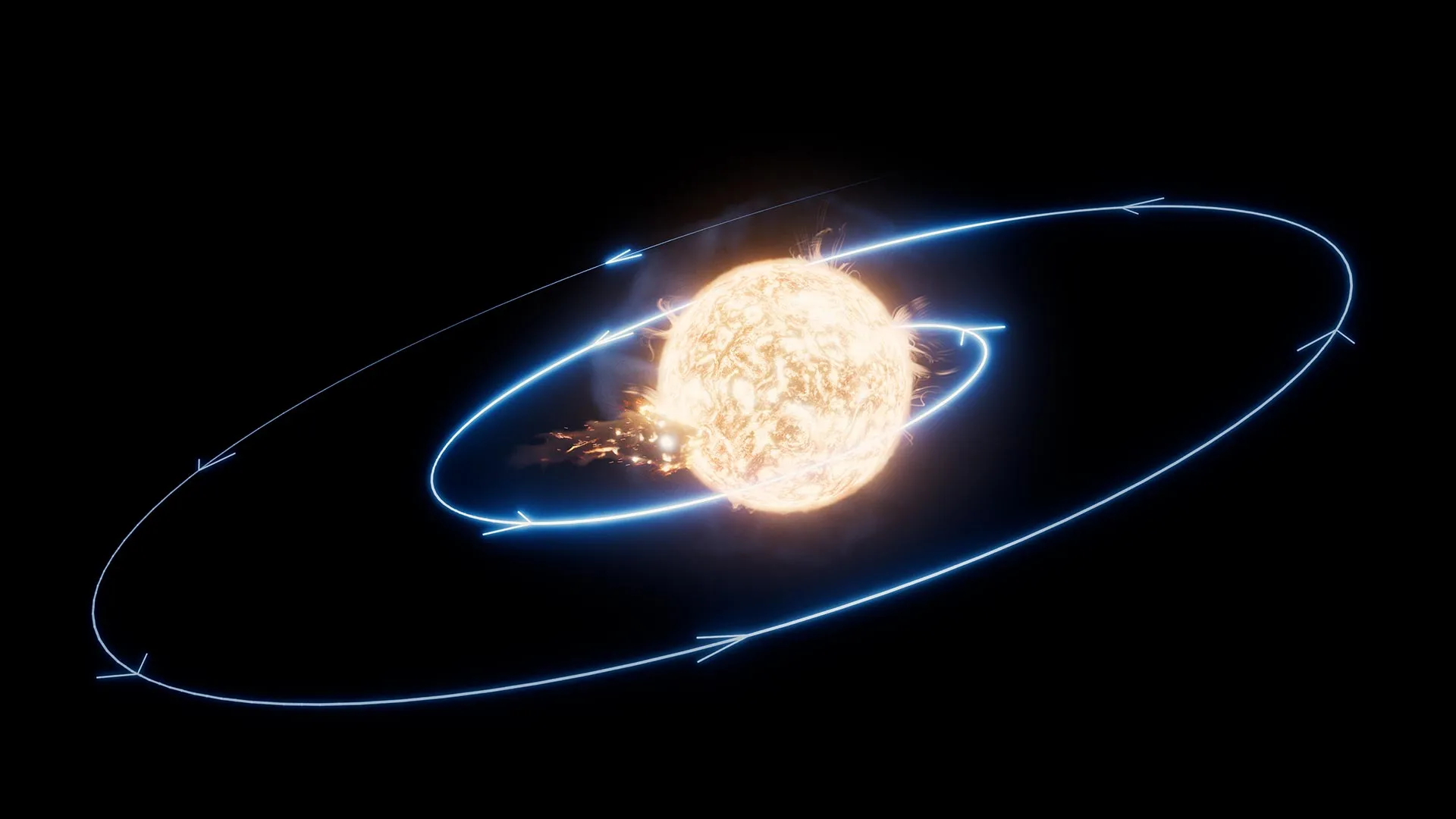
A new SETI study suggests we may be overlooking alien signals not because they aren’t there, but because their own stars are scrambling them before they escape into space. Turbulent plasma and powerful stellar storms can spread an ultra-narrow radio transmission across a wider range of frequencies, making it much harder for traditional searches to spot. The effect could be especially important around M-dwarf stars, the most common stars in the Milky Way.
Related Posts

Hawaii’s famous “happy-face” spider has a surprising relative
A newly discovered Happy-Face spider in the Himalayas closely resembles Hawaii’s iconic species but evolved independently, according to DNA evidence. Its mysterious smile-like markings, many
A newly discovered Happy-Face spider in the Himalayas closely resembles Hawaii’s iconic species but evolved independently, according to DNA evidence. Its mysterious smile-like markings, many
Sun-like star caught after eating one of its own planets
A distant Sun-like star appears to have devoured one of its planets, leaving behind a surprising chemical fingerprint. Researchers found an unusually high concentration of
A distant Sun-like star appears to have devoured one of its planets, leaving behind a surprising chemical fingerprint. Researchers found an unusually high concentration of

Researchers found a Wordle strategy that wins 99% of the time
Researchers developed a Wordle-solving strategy that succeeds 99% of the time by focusing on information gain rather than likely answers. The method uses Shannon entropy
Researchers developed a Wordle-solving strategy that succeeds 99% of the time by focusing on information gain rather than likely answers. The method uses Shannon entropy