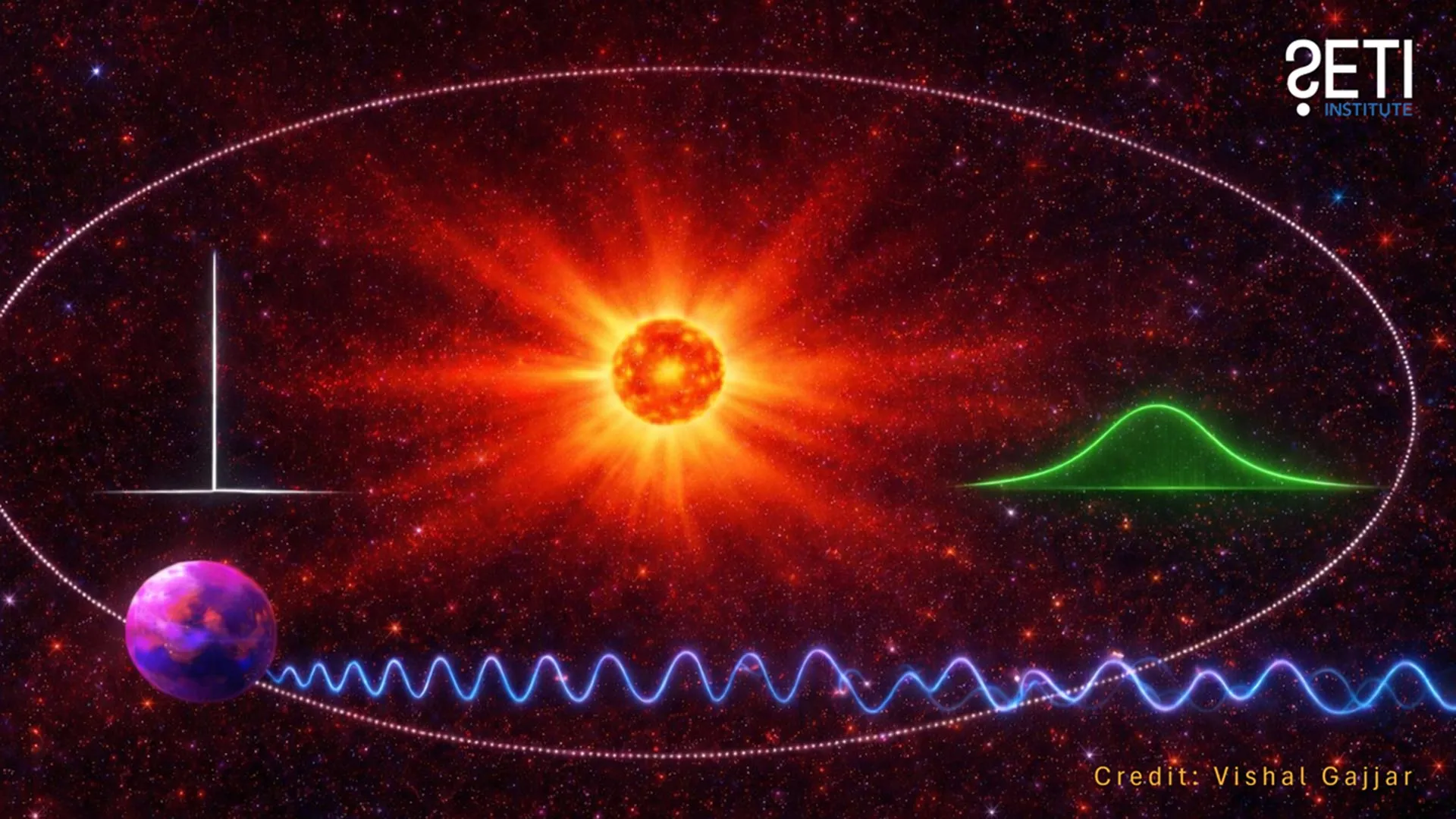
A new SETI study suggests we may be overlooking alien signals not because they aren’t there, but because their own stars are scrambling them before they escape into space. Turbulent plasma and powerful stellar storms can spread an ultra-narrow radio transmission across a wider range of frequencies, making it much harder for traditional searches to spot. The effect could be especially important around M-dwarf stars, the most common stars in the Milky Way.
Related Posts

New giant salamander species discovered in 3.5-million-year-old fossils
Fossils discovered in Japan more than two decades ago have finally been identified as a new genus and species of giant salamander. Limnospondylus ajimuensis lived
Fossils discovered in Japan more than two decades ago have finally been identified as a new genus and species of giant salamander. Limnospondylus ajimuensis lived

Scientists discover why peach fuzz can suddenly make you itch
A newly discovered network of fine hairs and specialized nerve cells appears to form a dedicated system for sensing mechanical itch, offering fresh insight into
A newly discovered network of fine hairs and specialized nerve cells appears to form a dedicated system for sensing mechanical itch, offering fresh insight into
If Privacy Matters To You, You’ll Want To Check Out WhatsApp’s Latest Update ASAP
This seemingly small update could make a big difference for your privacy. Here’s what you need to know.
This seemingly small update could make a big difference for your privacy. Here’s what you need to know.