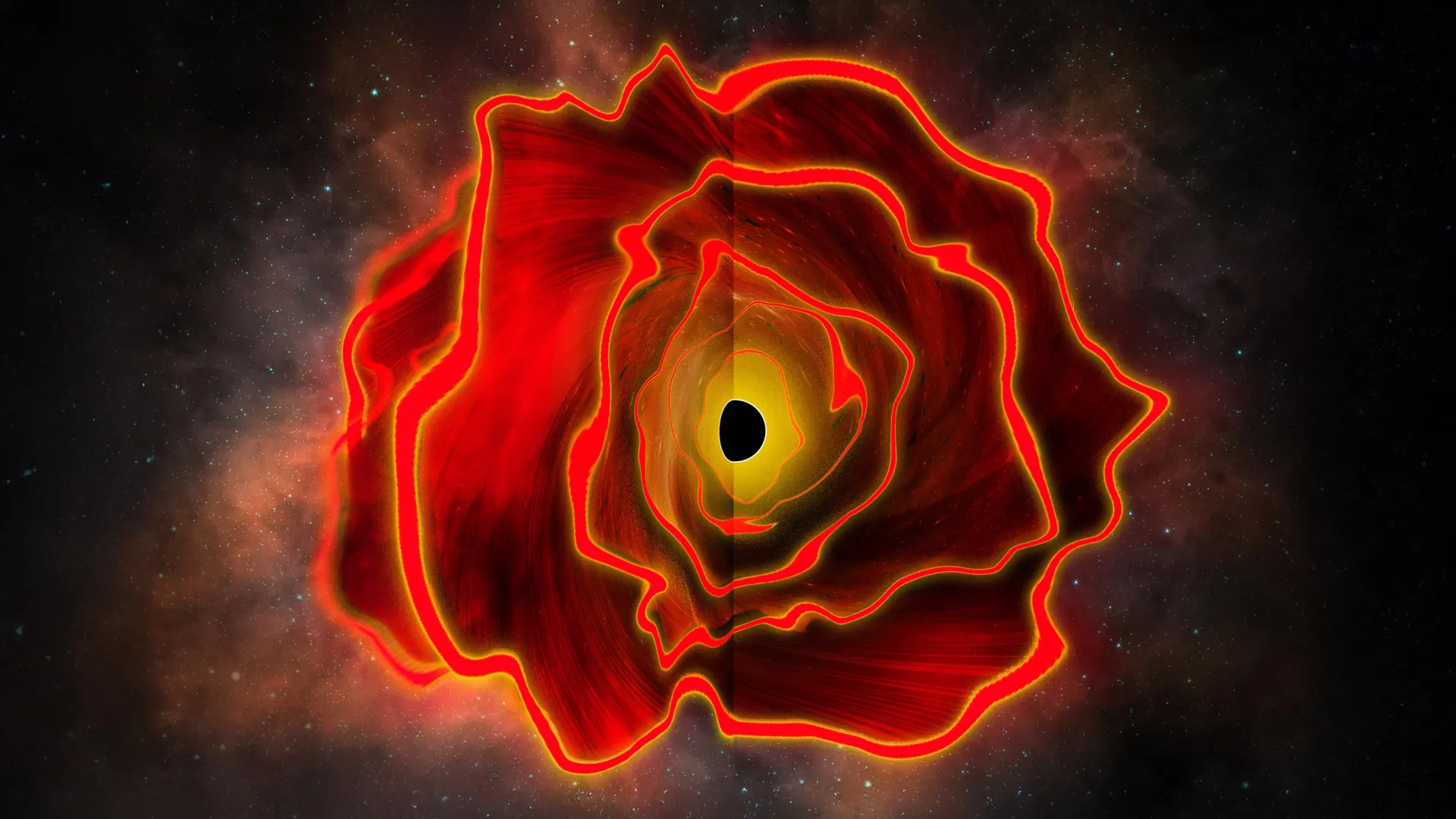
Astronomers using the James Webb Space Telescope have discovered a bizarre object from just a few hundred million years after the Big Bang that looks like an enormous star but shines far too brightly to actually be one. The mysterious red object, dubbed a “black hole star,” may contain a black hole about 100,000 times the mass of the Sun wrapped inside a dense, star-like cocoon of hydrogen roughly the size of our solar system.
Related Posts

The benefits of ‘body doubling’ when you have ADHD, according to experts
‘Body doubling’ is a strategy people with ADHD can use to accomplish more than they would alone. Here’s how to do it.
‘Body doubling’ is a strategy people with ADHD can use to accomplish more than they would alone. Here’s how to do it.

Inside the Backrooms: The internet’s creepiest place is becoming a tourist attraction
The Backrooms began as a single eerie image of empty yellow rooms, but internet users transformed it into a vast fictional world that feels disturbingly
The Backrooms began as a single eerie image of empty yellow rooms, but internet users transformed it into a vast fictional world that feels disturbingly
Dark matter’s secret force does the opposite of what scientists expected
Dark matter particles may exert a hidden force on one another, but its effects are stranger than expected. An extra attraction helps the particles cluster
Dark matter particles may exert a hidden force on one another, but its effects are stranger than expected. An extra attraction helps the particles cluster