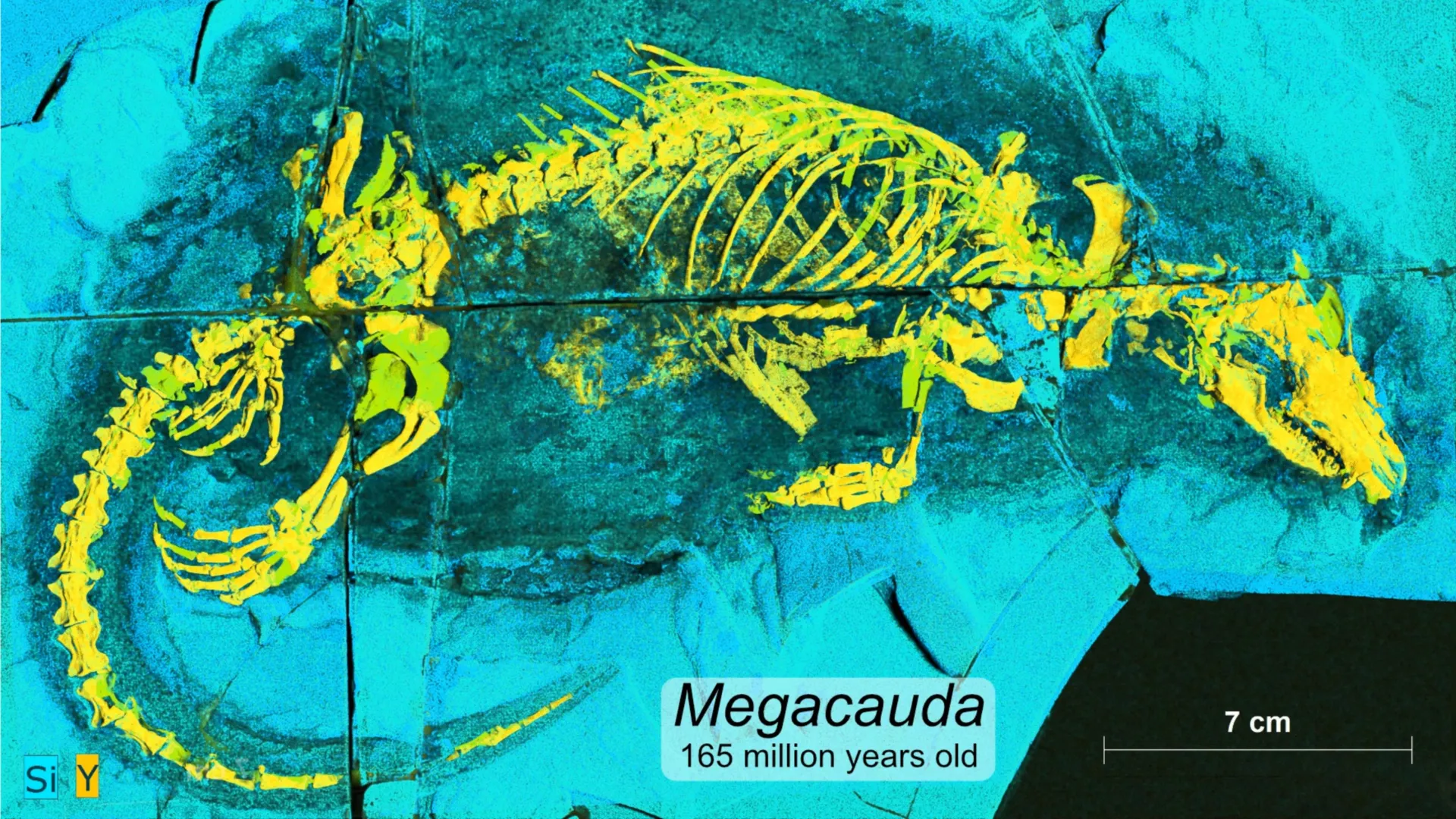
A 165-million-year-old fossil has revealed an extraordinary Jurassic predator that may help explain how mammals developed one of their most important evolutionary advantages. Although only 20 inches long, Megacauda sungei was a heavyweight among early mammal relatives, swimming through ancient waterways and hunting prey with specialized teeth. Its advanced swallowing anatomy reveals an early step toward the ability to safely nurse on milk, a key development in mammalian evolution.
Related Posts

Scientists warn a popular vitamin D supplement may have a hidden downside
Not all vitamin D supplements are created equal, and new research suggests that one popular form may have an unexpected downside. Scientists found that taking
Not all vitamin D supplements are created equal, and new research suggests that one popular form may have an unexpected downside. Scientists found that taking

Experts Reveal What Could Actually Happen If AI Enters ‘Recursive Self-Improvement’ — And It’s Scary
This advancement could lead to “humans losing control over AI,” one leading AI lab says.
This advancement could lead to “humans losing control over AI,” one leading AI lab says.

Ancient DNA reveals how plague kept returning for 400 years after the Black Death
Ancient DNA reveals that plague repeatedly returned to Europe for more than 400 years after the Black Death, evolving into new lineages and spreading through
Ancient DNA reveals that plague repeatedly returned to Europe for more than 400 years after the Black Death, evolving into new lineages and spreading through