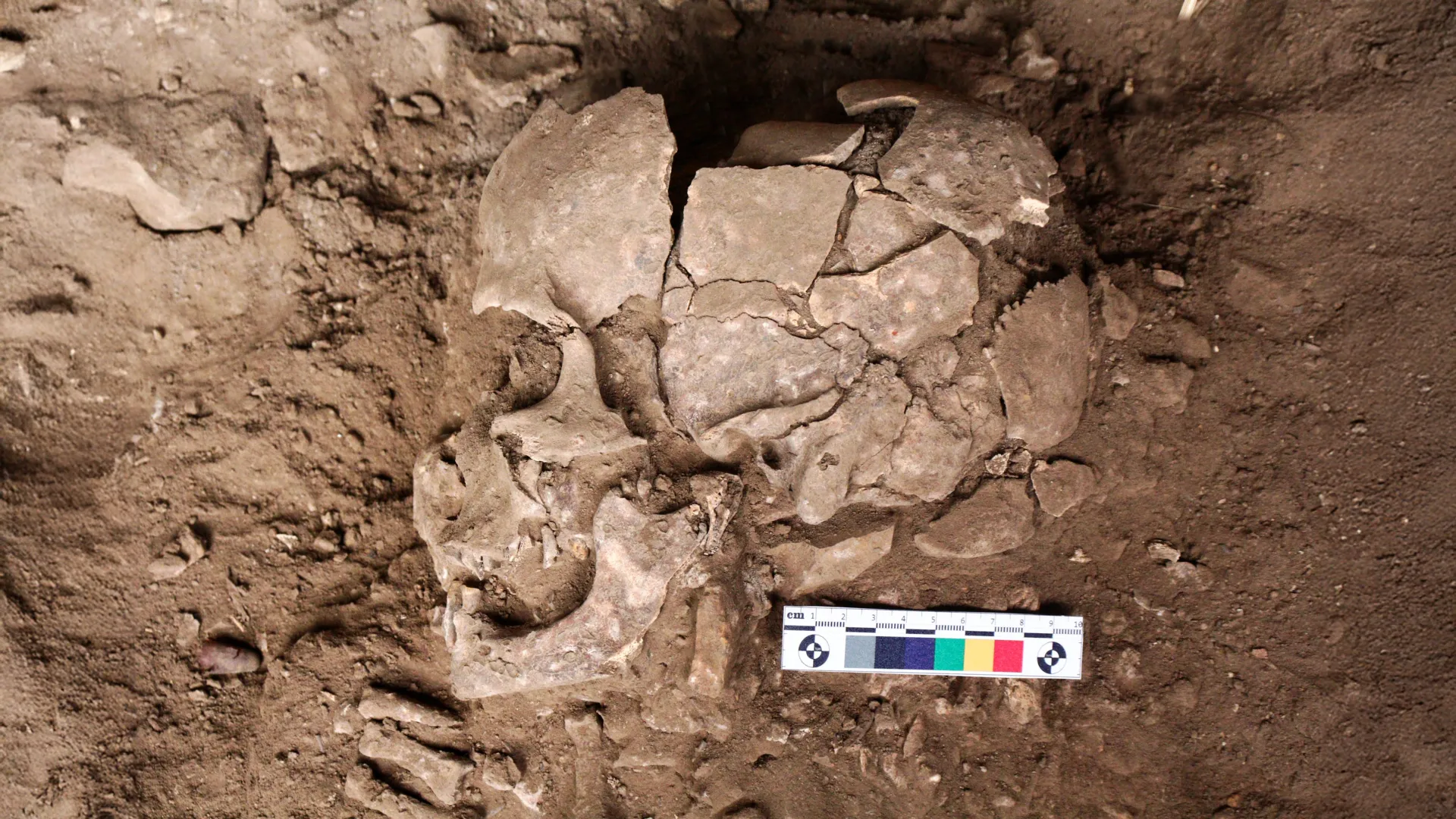
Ancient human remains from Sulawesi suggest people were habitually using the psychoactive betel nut as far back as 25,000 years ago. Researchers found both unusual tooth wear and traces of arecoline, the nut’s mind-altering compound, in the teeth of prehistoric hunter-gatherers. The practice may have started partly as pain relief for toothaches, but prolonged use severely damaged their teeth. The discovery could represent the earliest known evidence of habitual drug use anywhere in the world.
Related Posts

Scientists find signs of extreme aging and youth in the same 117-year-old
A remarkably detailed study of Maria Branyas, who lived past 117, reveals that extreme longevity may involve both intense aging and powerful biological protection at
A remarkably detailed study of Maria Branyas, who lived past 117, reveals that extreme longevity may involve both intense aging and powerful biological protection at

Scientists stunned as volcano cloud starts destroying methane
The Hunga Tonga eruption may have triggered a surprising chemical reaction that destroyed some of the methane released into the atmosphere. Scientists say the discovery
The Hunga Tonga eruption may have triggered a surprising chemical reaction that destroyed some of the methane released into the atmosphere. Scientists say the discovery

Venus may have swallowed its own moon
Venus may have once had a moon, but new research suggests the planet’s incredibly slow rotation could have doomed it. Computer simulations showed that instead
Venus may have once had a moon, but new research suggests the planet’s incredibly slow rotation could have doomed it. Computer simulations showed that instead