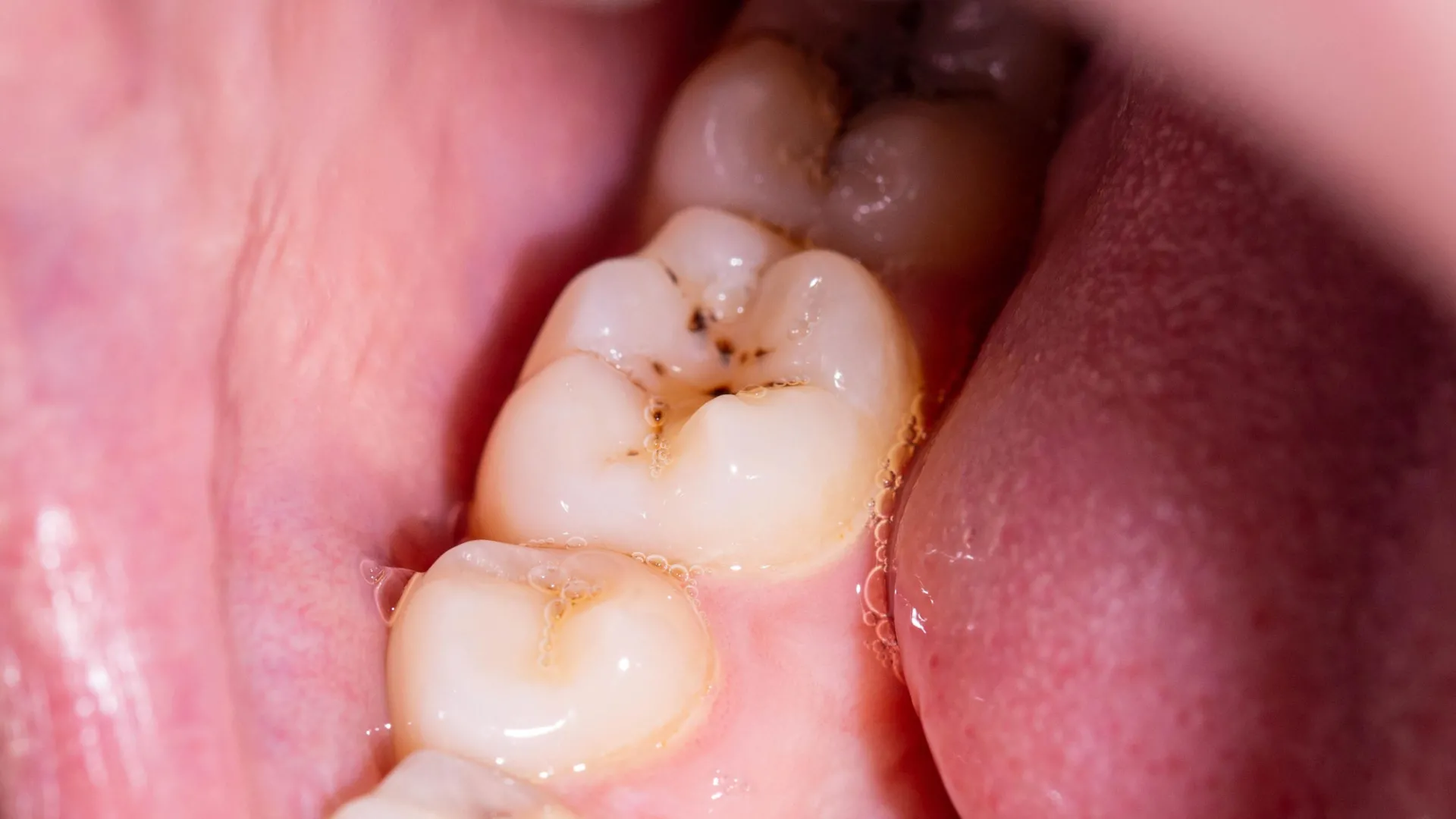
Researchers have developed a fluoride-free gel that could help rebuild damaged tooth enamel, something the body cannot naturally replace once it is lost. Inspired by the proteins that guide enamel formation in infancy, the gel fills microscopic cracks and draws calcium and phosphate from saliva to grow a new mineral layer that closely matches healthy enamel.
Related Posts
Magic mushrooms may reshape the brain long after the trip ends
A single dose of psilocybin produced measurable changes in brain activity and possible changes in brain structure that lasted for up to a month. Participants
A single dose of psilocybin produced measurable changes in brain activity and possible changes in brain structure that lasted for up to a month. Participants

Alien signals may be hiding where we rarely listen
Astronomers may have been listening for alien civilizations in only a small slice of the radio spectrum while overlooking a largely unexplored range of higher
Astronomers may have been listening for alien civilizations in only a small slice of the radio spectrum while overlooking a largely unexplored range of higher
Modern neuroscience is rediscovering an idea Freud had 130 years ago
What if Sigmund Freud was onto something that modern neuroscience is only now beginning to explain? A new paper argues that today’s leading theory of
What if Sigmund Freud was onto something that modern neuroscience is only now beginning to explain? A new paper argues that today’s leading theory of