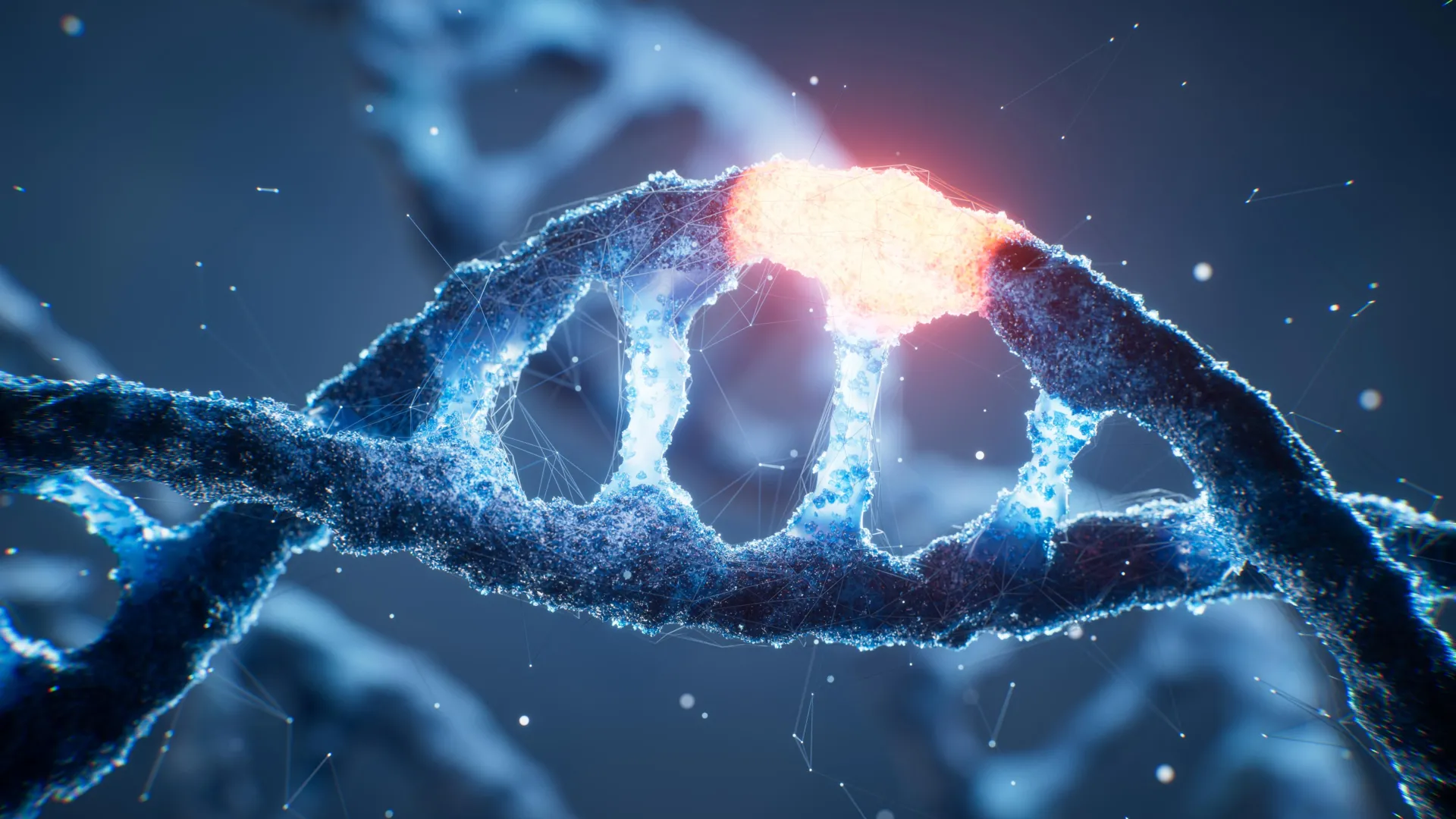
Researchers at UC San Diego have demonstrated that a key cellular enzyme can accurately read an eight-letter genetic alphabet, doubling the four letters used by all known life on Earth. Detailed imaging revealed that RNA polymerase handles synthetic DNA letters in surprisingly similar ways to natural ones. The finding brings scientists closer to building expanded genetic systems that could perform entirely new biological functions.
Related Posts

A strange circle on satellite maps turned out to be a 390-million-year-old impact crater
An amateur astronomer searching satellite maps for a Quebec camping spot accidentally discovered a massive ancient impact crater. Scientists later found shatter cones that confirmed
An amateur astronomer searching satellite maps for a Quebec camping spot accidentally discovered a massive ancient impact crater. Scientists later found shatter cones that confirmed
Groundbreaking stone inscription discovery ‘proves’ Bible is real and Jesus existed
The Tel Dan inscription, or “House of David” inscription, was unearthed in 1993 at the site of Tel Dan in northern Israel.
The Tel Dan inscription, or “House of David” inscription, was unearthed in 1993 at the site of Tel Dan in northern Israel.

Man, 44, charged with smashing Belfast’s Big Fish sculpture
Damage was caused to the ‘Big Fish’ sculpture in an overnight incident in Belfast. (Picture: Jonathan McCambridge/PA Wire) A man is set to appear in
Damage was caused to the ‘Big Fish’ sculpture in an overnight incident in Belfast. (Picture: Jonathan McCambridge/PA Wire) A man is set to appear in