
Scientists have uncovered a surprising way that “jumping genes” may move between species and speed up evolution. While these mobile genetic elements were thought to travel mainly inside viruses or plasmids, researchers found circular intron RNA from a tiny predatory bacterium inside the dead cells of another microorganism. Because the RNA forms a stable ring that resists breakdown, it may provide jumping genes with a previously unknown route for spreading between species.
Related Posts

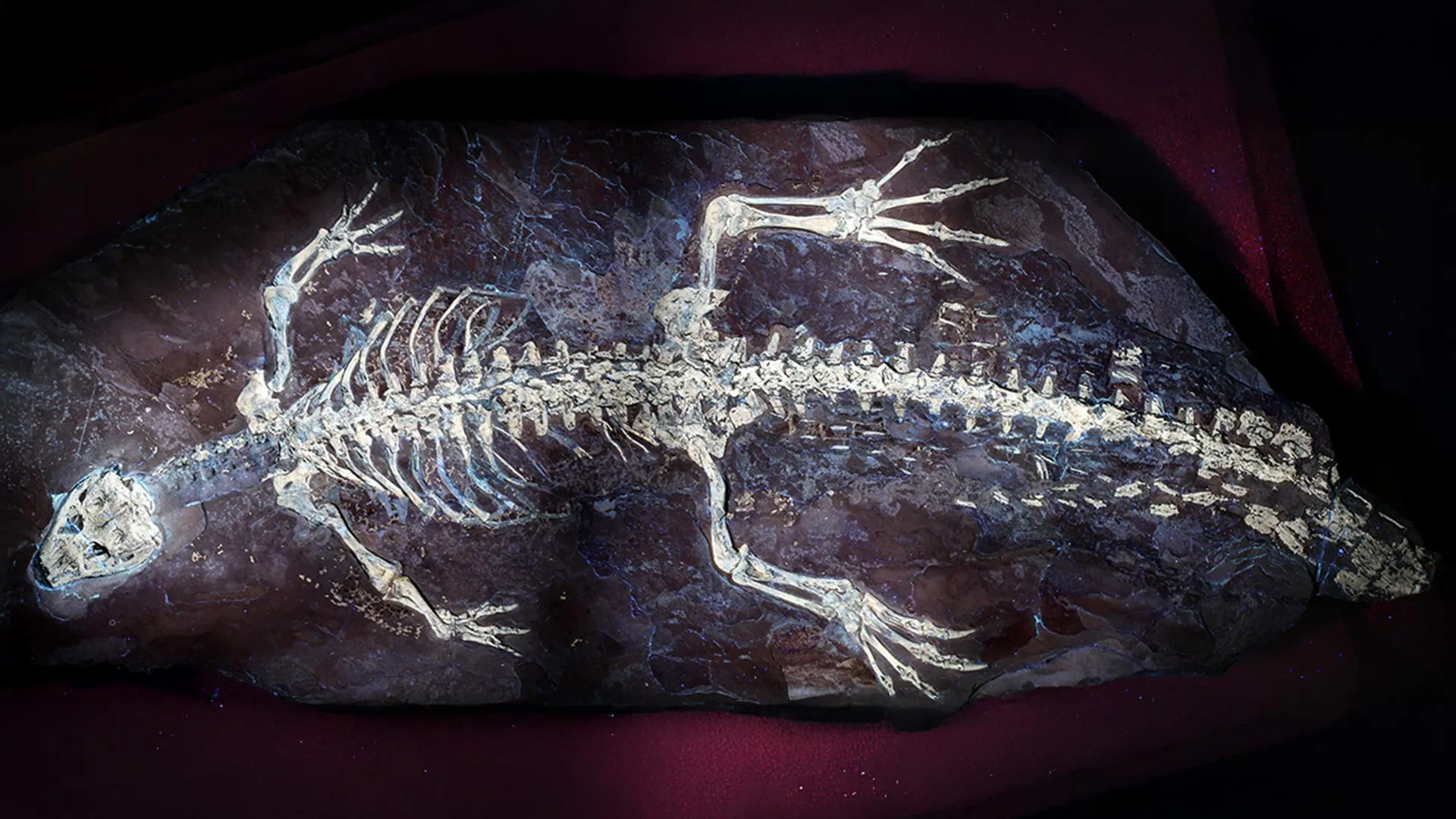
UV light reveals possible camouflage on a 125-million-year-old crocodile
A 125-million-year-old crocodile fossil has revealed preserved skin, possible sensory organs, sophisticated respiratory structures, and an unexpected pattern on its tail. Ultraviolet light exposed alternating
A 125-million-year-old crocodile fossil has revealed preserved skin, possible sensory organs, sophisticated respiratory structures, and an unexpected pattern on its tail. Ultraviolet light exposed alternating

Desperate for heart surgery for their baby, a family feels the effects of pediatric hospital shortages
Even before their daughter was born in June, Aaron and Helen Chavez knew she would need heart surgery. Doctors expected her to have an operation
Even before their daughter was born in June, Aaron and Helen Chavez knew she would need heart surgery. Doctors expected her to have an operation