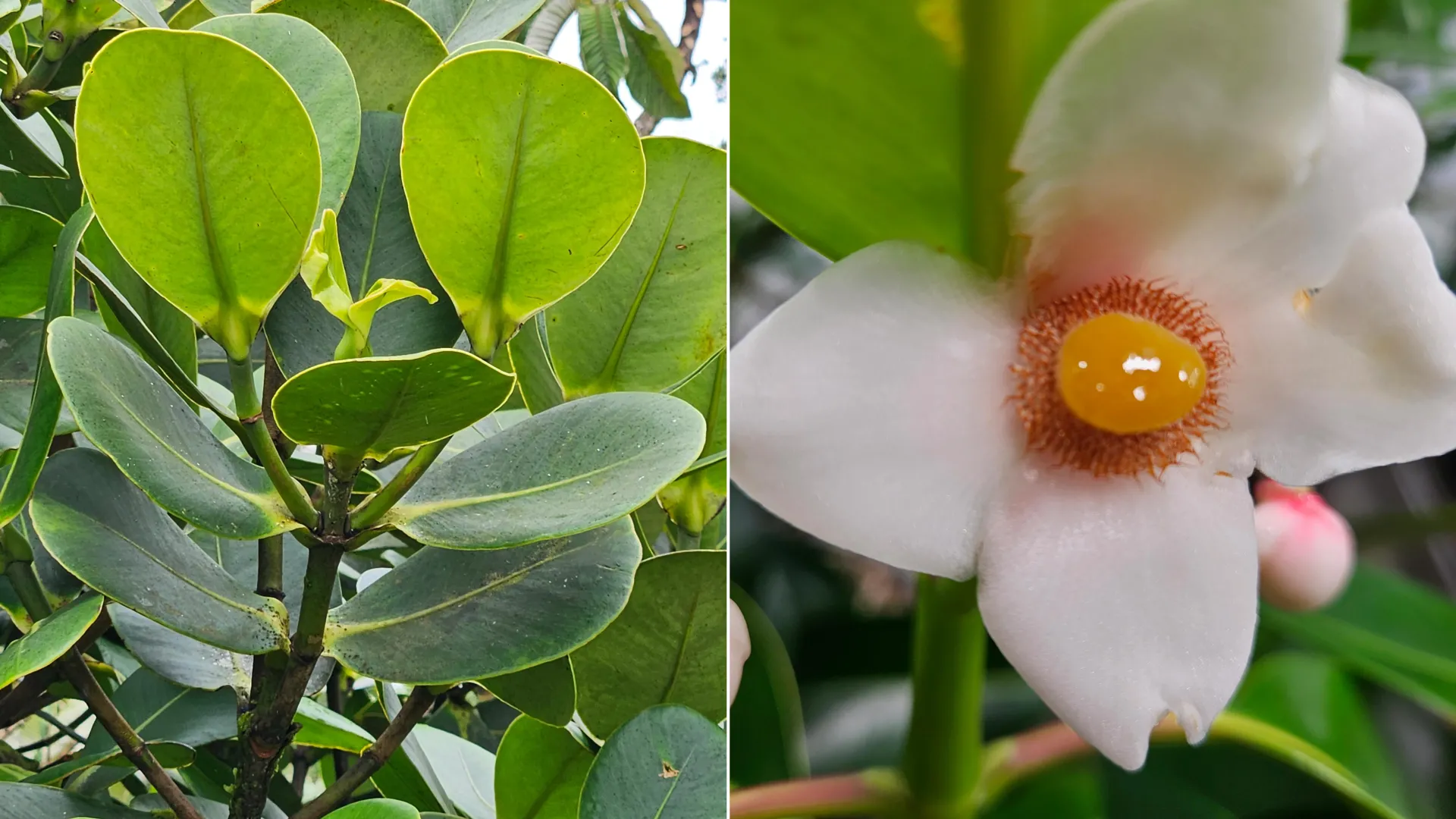
Some tropical trees have evolved a clever way to survive drought by taking in carbon dioxide at night, allowing them to keep their pores closed during the hot daytime and conserve water. By comparing three Clusia species, researchers discovered that this water-saving form of photosynthesis, known as CAM, did not arise through a single evolutionary change. Instead, ancient genome duplications followed by millions of years of genetic reshuffling produced strikingly different strategies, from strong CAM to stress-triggered and hybrid forms.
Related Posts

A hidden compound in healthy foods may worsen IBD
A natural compound found in foods such as spinach, almonds, and sweet potatoes may aggravate gut inflammation in people with Crohn’s disease and ulcerative colitis
A natural compound found in foods such as spinach, almonds, and sweet potatoes may aggravate gut inflammation in people with Crohn’s disease and ulcerative colitis

Scientists say love follows hidden mathematical rules
Could math help explain why some relationships survive life’s inevitable stresses while others slowly fall apart? Researchers have spent decades developing mathematical models that treat
Could math help explain why some relationships survive life’s inevitable stresses while others slowly fall apart? Researchers have spent decades developing mathematical models that treat

This Sneaky App Is Probably Sucking Up Your iPhone Storage. Here’s How To Free Up Space.
This easy fix will give you more data on your device so you can go back to screenshotting every meme you see.
This easy fix will give you more data on your device so you can go back to screenshotting every meme you see.