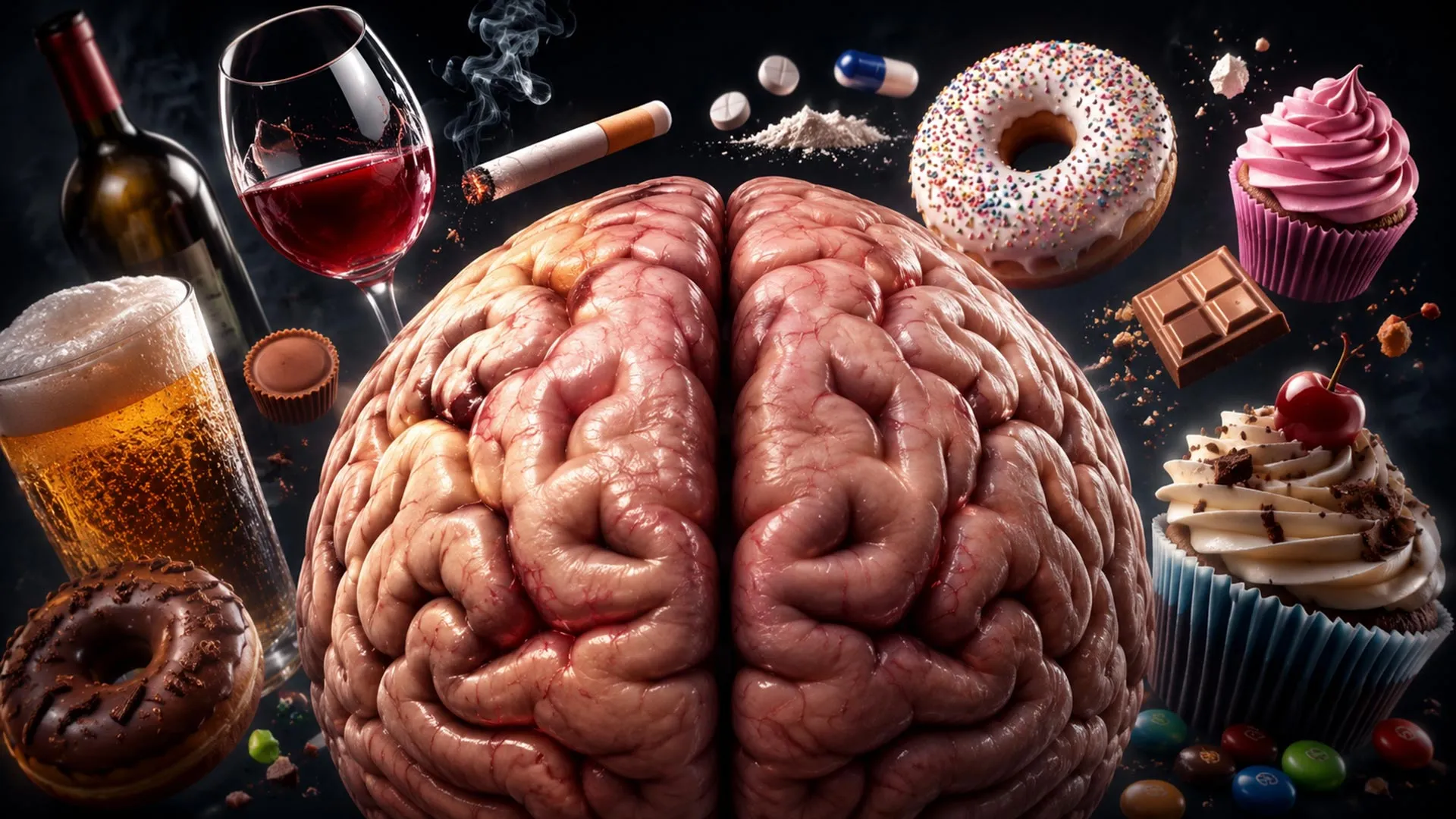
Ozempic-like drugs appear to weaken more than hunger—they may also reduce cravings for alcohol and other addictive substances. Scientists are increasingly tracing this effect to the lateral septum, a brain region that helps connect memories and surroundings with rewarding experiences. Packed with GLP-1 receptors, it may act as a crucial control point between thinking about a reward and feeling compelled to pursue it. The discovery could open new approaches to treating addiction as well as obesity.
Related Posts
Watching too much TV in midlife may shrink the brain
Watching television very often in midlife may be linked to troubling brain changes decades later. In a study of about 1,700 adults, frequent TV viewers
Watching television very often in midlife may be linked to troubling brain changes decades later. In a study of about 1,700 adults, frequent TV viewers

This school-bus-sized “terror croc” ate dinosaurs. Now it’s back
A massive crocodilian capable of attacking dinosaurs has been brought back to life as the first scientifically accurate mounted skeleton of Deinosuchus schwimmeri. The 31-foot
A massive crocodilian capable of attacking dinosaurs has been brought back to life as the first scientifically accurate mounted skeleton of Deinosuchus schwimmeri. The 31-foot

Common constipation drug may help clear depression brain fog
An existing constipation drug may have an unexpected new use: helping clear the “brain fog” that often lingers after depression. In a small clinical trial
An existing constipation drug may have an unexpected new use: helping clear the “brain fog” that often lingers after depression. In a small clinical trial