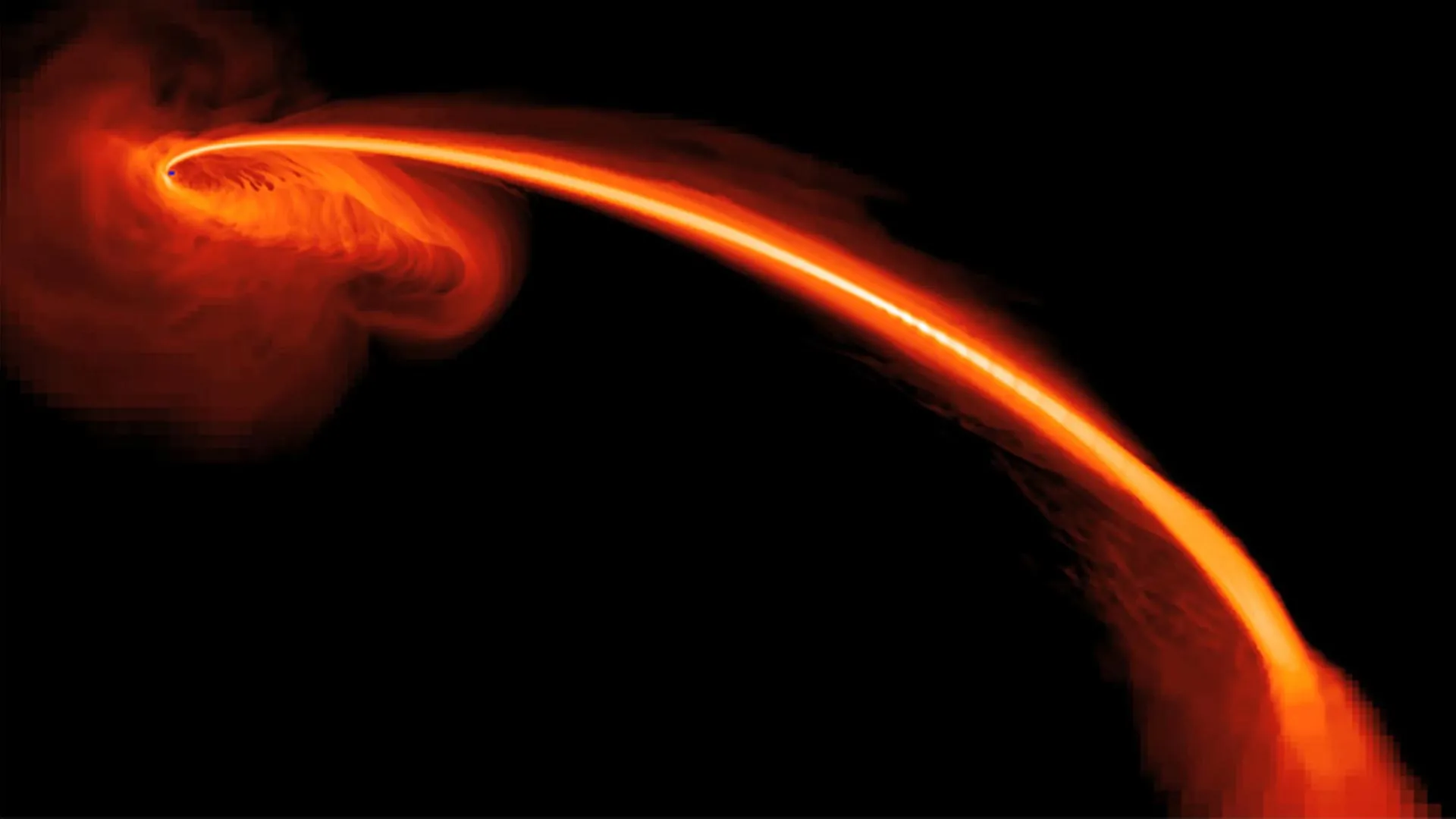
Astronomers have found stars that repeatedly skim past supermassive black holes, surviving each encounter while producing a new burst of light. In some systems, those flares mysteriously fade with every return. Researchers now think the key may be stars that were already spinning extremely fast before being captured. That rapid rotation could explain both the fading flares and how the stars ended up in such extraordinarily tight black hole orbits.
Related Posts

Second Ohio house of horrors ‘covered in poo’ discovered after 16 ‘feral’ kids saved
A second property linked to the Siders family, who were arrested after 16 children were found living in squalid conditions in Hamden, Ohio, has been
A second property linked to the Siders family, who were arrested after 16 children were found living in squalid conditions in Hamden, Ohio, has been

Chimpanzees have been hurling rocks at the same trees for more than a decade
Some chimpanzees in West Africa repeatedly throw rocks at particular trees, creating piles of stones that can remain in use for more than a decade.
Some chimpanzees in West Africa repeatedly throw rocks at particular trees, creating piles of stones that can remain in use for more than a decade.

Woman recalls decisive ‘left hook’ after coming face-to-face with great white shark
Leah Stewart, a 34-year-old teacher and mom-of-one, survived a terrifying great white shark attack in Australia, after throwing a left hook at the ‘monster’
Leah Stewart, a 34-year-old teacher and mom-of-one, survived a terrifying great white shark attack in Australia, after throwing a left hook at the ‘monster’