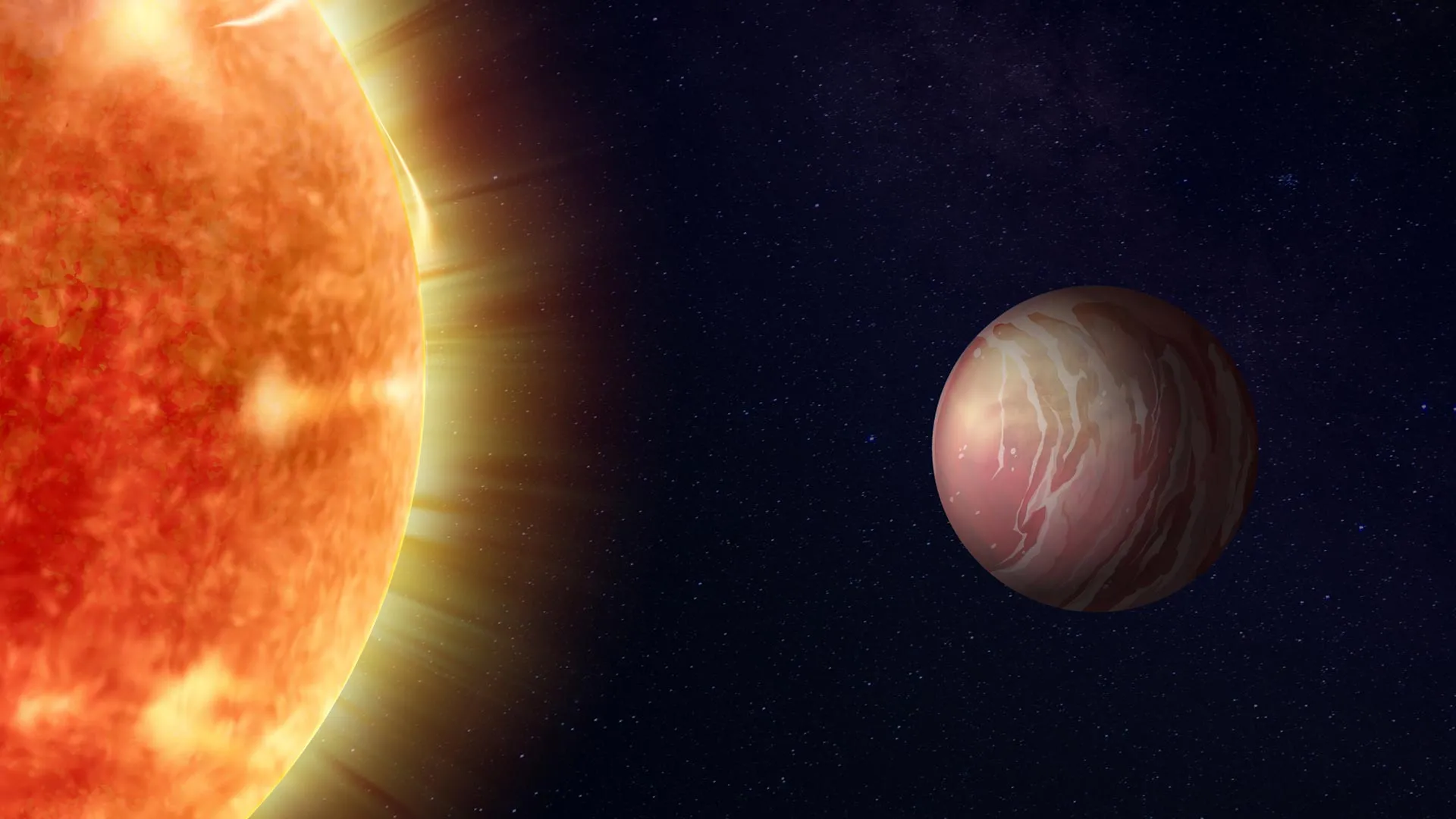
A scorching lava planet 280 light-years away has surprised astronomers by apparently maintaining a thick atmosphere despite conditions that should have stripped it away billions of years ago. James Webb Space Telescope observations suggest that TOI-561 b reflects about 75% of incoming starlight, possibly because of mineral clouds that act like a giant sunscreen. The planet may also be continually replenishing its atmosphere through gases released from a global ocean of molten rock.
Related Posts

Gigantic prehistoric snake discovered in India may have been one of the largest ever
A massive prehistoric snake discovered in India may have rivaled the largest snake ever known. Called Vasuki indicus, the 47-million-year-old giant could have reached up
A massive prehistoric snake discovered in India may have rivaled the largest snake ever known. Called Vasuki indicus, the 47-million-year-old giant could have reached up

A forgotten fossil reveals a fearsome dinosaur with giant claws
A 120-million-year-old fossil forgotten in a museum for nearly a century has revealed a terrifying new dinosaur that may have been more dangerous to humans
A 120-million-year-old fossil forgotten in a museum for nearly a century has revealed a terrifying new dinosaur that may have been more dangerous to humans

Modern neuroscience is rediscovering a surprising idea freud had 130 years ago
Researchers have identified striking parallels between Sigmund Freud’s century-old theories and modern neuroscience, suggesting that the brain’s constant predictions shape how we experience reality. The
Researchers have identified striking parallels between Sigmund Freud’s century-old theories and modern neuroscience, suggesting that the brain’s constant predictions shape how we experience reality. The